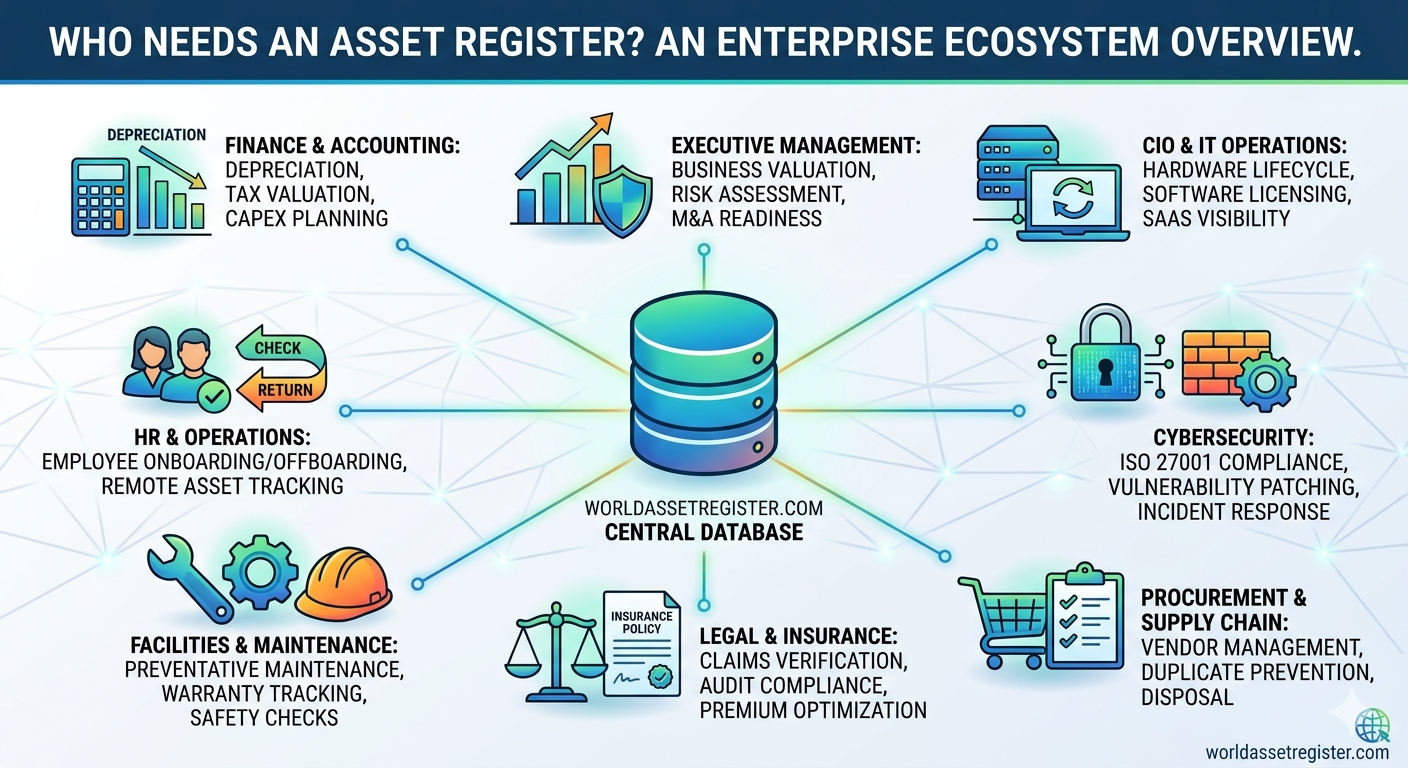
Asset tracking software keeps a live, structured record of where your assets are, what condition they're in, and who is responsible for them, so a business always knows what it owns without relying on someone's memory or a spreadsheet that's three months out of date.
The old way: spreadsheets and manual counts
Most businesses start tracking assets in a spreadsheet, and it works fine at a small scale. The cracks appear during the physical audit: someone walks the floor with a printout, writes down serial numbers by hand, and re-enters everything back at a desk. Every step is a chance for a typo, a missed asset, or a record that's already stale by the time it's saved.
The new way: point your phone, AI does the rest
Mobile AI photo capture removes the re-entry step entirely. During a walk-through, staff photograph an asset on their phone and the system reads the photo, matches it to the existing record (or flags it as new), and fills in the details, no manual typing, no separate spreadsheet to reconcile afterwards.
What good asset tracking software should include
How World Asset Register handles asset tracking
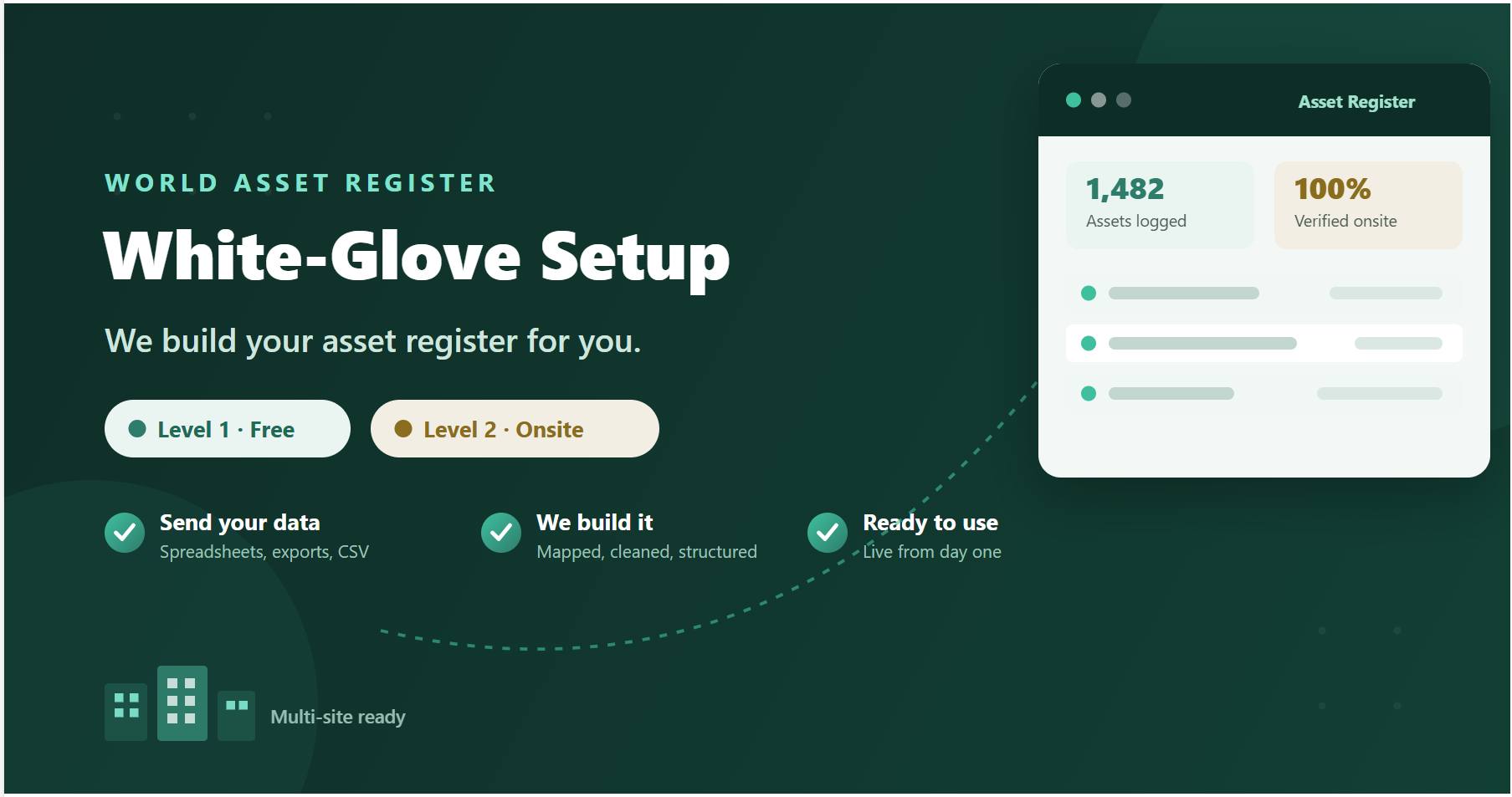
World Asset Register is built around a free-form asset category tree (FACT), so vehicles, IT equipment, medical devices, and licences each get a structure that fits them rather than a one-size-fits-all form. Its natural-language policy engine lets you write a rule once, such as making sure no warranties are out of date, and have it checked automatically across every asset. Audits are done by photo: point a phone at the asset and the AI reads it and fills in the record. New customers get 1,000 assets free forever, no card and no trial, and the team will build out your first register for you from whatever spreadsheets or exports you already have.
Related reading
Free for your first 100 assets. Import your spreadsheet in five minutes.